False Lashes for Sensitive Eyes: The Australian Guide to Lashes That Won’t Sting, Itch or Swell
Short answer: Yes — people with sensitive eyes can absolutely wear false lashes. You just need to skip the salon-strength cyanoacrylate glue, choose either a pre-bonded or low-fume DIY system, and steer well clear of mink, formaldehyde and fragrance. Here are the four sensitive-eye-friendly options ranked best to worst, including one that uses no liquid glue at all.

Table of Contents
- How do I know if I have sensitive eyes?
- Why salon lash extensions are usually a no for sensitive eyes
- The 4 Best False Lashes for Sensitive Eyes, Ranked
- The sensitive-eye lash compatibility cheat sheet
- What to look for on the label if you have sensitive eyes
- The sensitive-eye lash care routine
- FAQ
How do I know if I have sensitive eyes?
Sensitive eyes is a catch-all term, but the signs are pretty consistent:
- Your eyes water within minutes of applying eye makeup
- The skin on your eyelid gets pink, dry or itchy after wearing mascara or strip lashes
- You’ve had a reaction to salon lash extensions (red waterline, swollen eyelid, gritty feeling, allergy lasting days)
- Eye creams, fragranced moisturisers or sunscreens around your eye area sting
- You react to formaldehyde, latex, fragrance or nickel elsewhere on your body
If two or more of these sound familiar, you’ve got sensitive eyes — possibly with a low-level allergy to one of the chemicals beauty products tend to share. The good news: identifying the trigger usually means you can avoid it.
The two biggest triggers in the lash world are cyanoacrylate adhesives (the glue in salon and some DIY lash extensions) and formaldehyde (used as a preservative in cheap lash glues, or released as adhesives age). Both are well-documented contact allergens.
Why salon lash extensions are usually a no for sensitive eyes
Traditional salon lash extensions are applied with a high-strength cyanoacrylate adhesive designed to last 3-4 weeks. The trade-off for that staying power is:
- Stronger fumes during application. The glue cures fast, releasing vapours that can sting even people without sensitive eyes.
- Hours of close contact. You lie with your eyes closed for 90+ minutes while the technician works near your lash line. Any reactive component sits there the entire time.
- Weeks of continuous wear. Even a mild irritant becomes a problem when it’s glued to your lash line for two months.
If you’ve had a reaction to salon extensions in the past, please don’t book another set hoping it’ll be different. Allergies tend to escalate with repeat exposure, not soften. There are better options below.
The 4 Best False Lashes for Sensitive Eyes, Ranked
This is where most guides oversimplify. There aren’t just three options. There are four, and the best one for sensitive eyes is the one most articles forget to mention.
Option 1: Pre-bonded DIY lash extensions (no liquid glue, best for sensitive eyes)
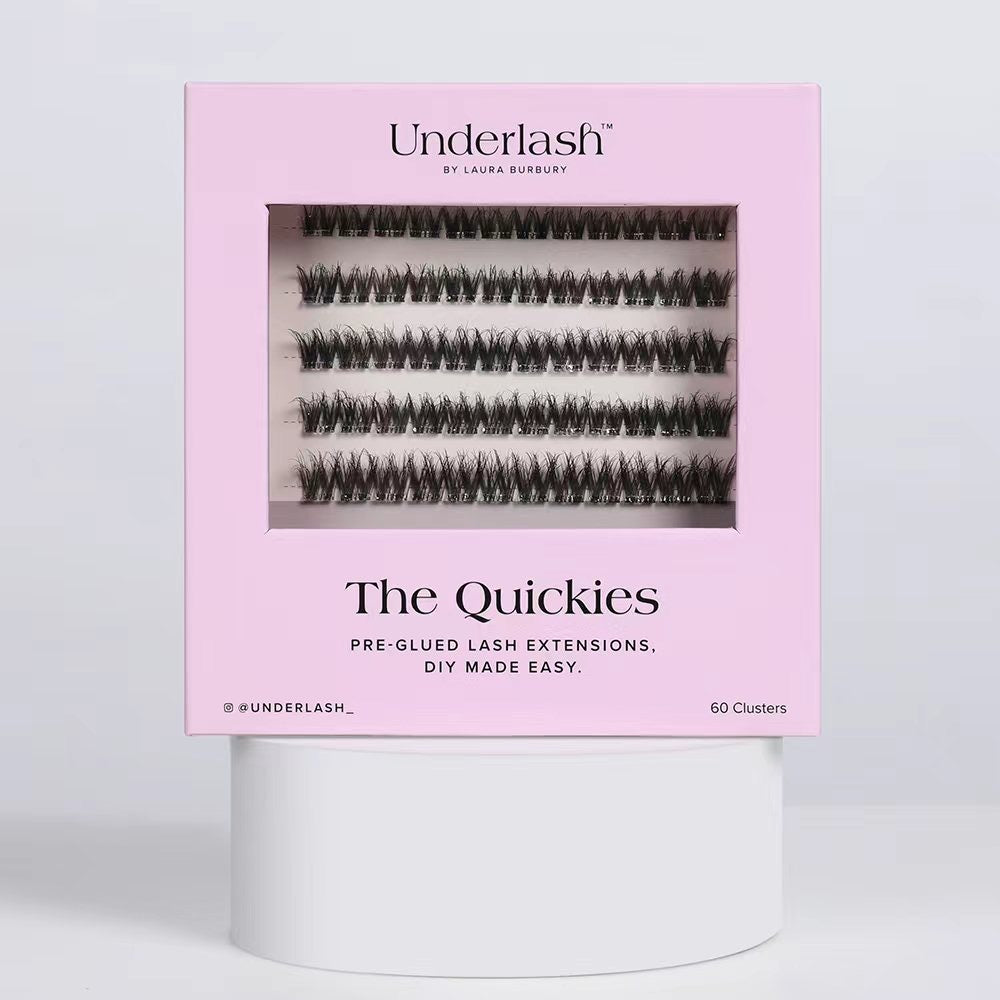
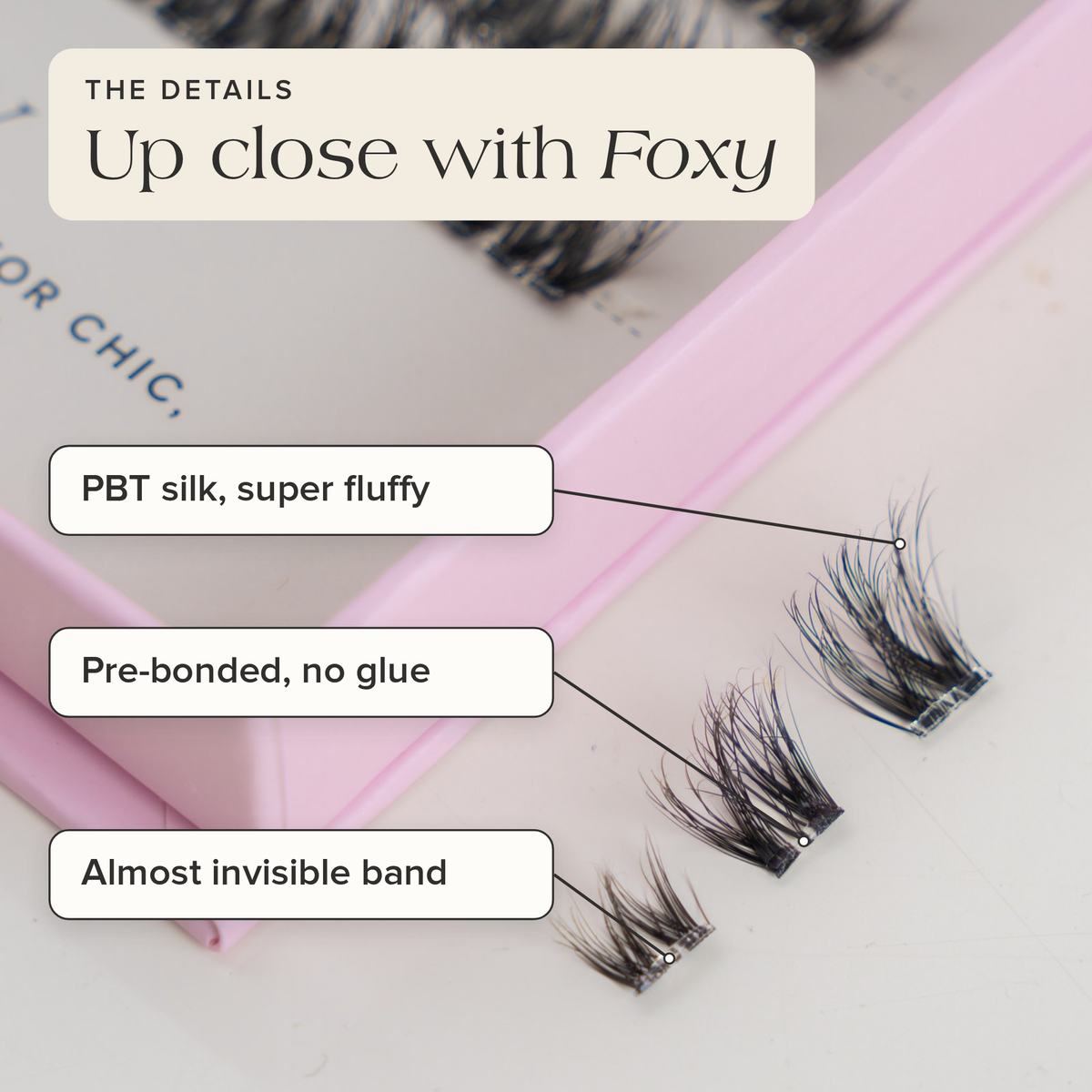
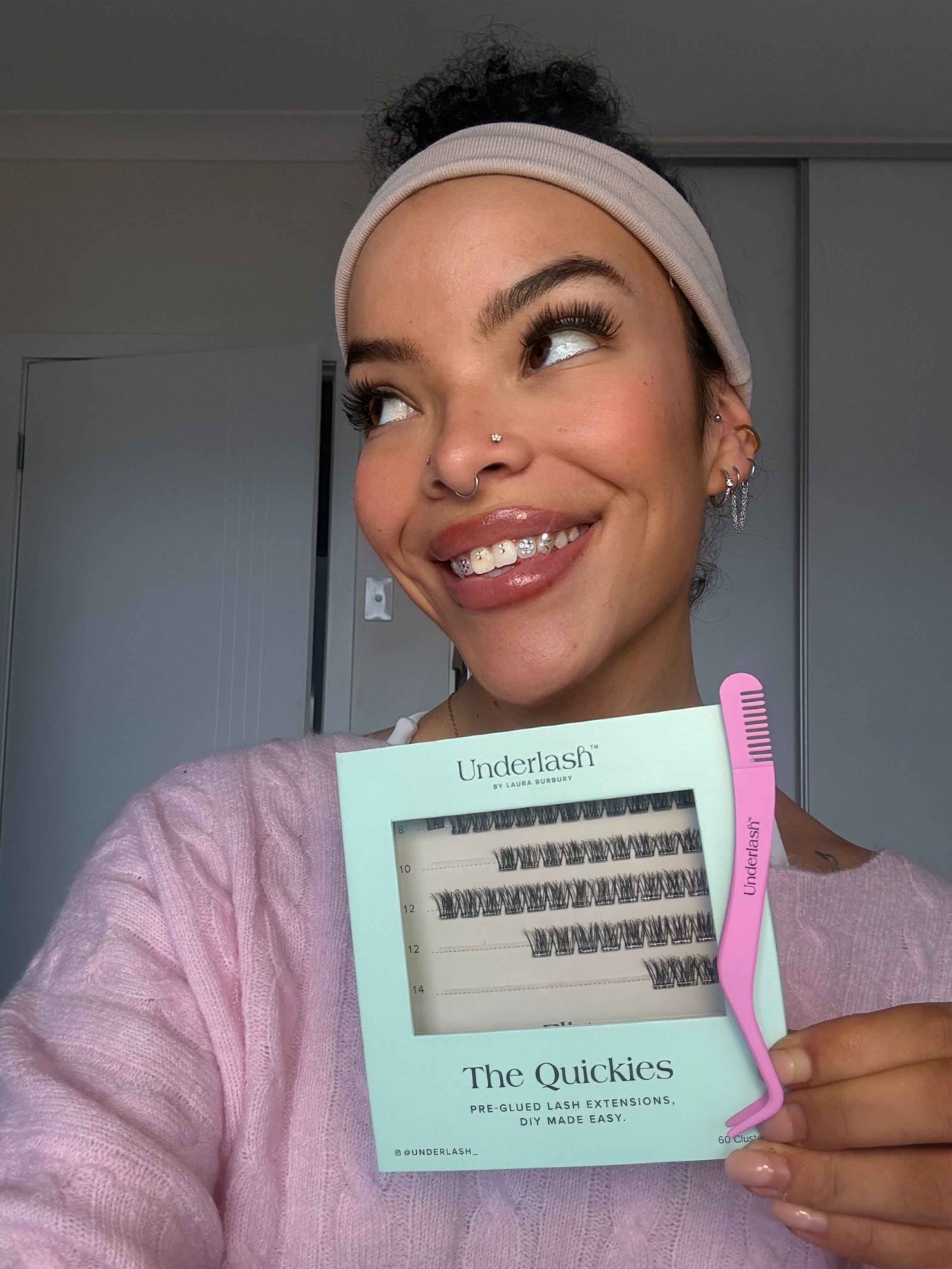
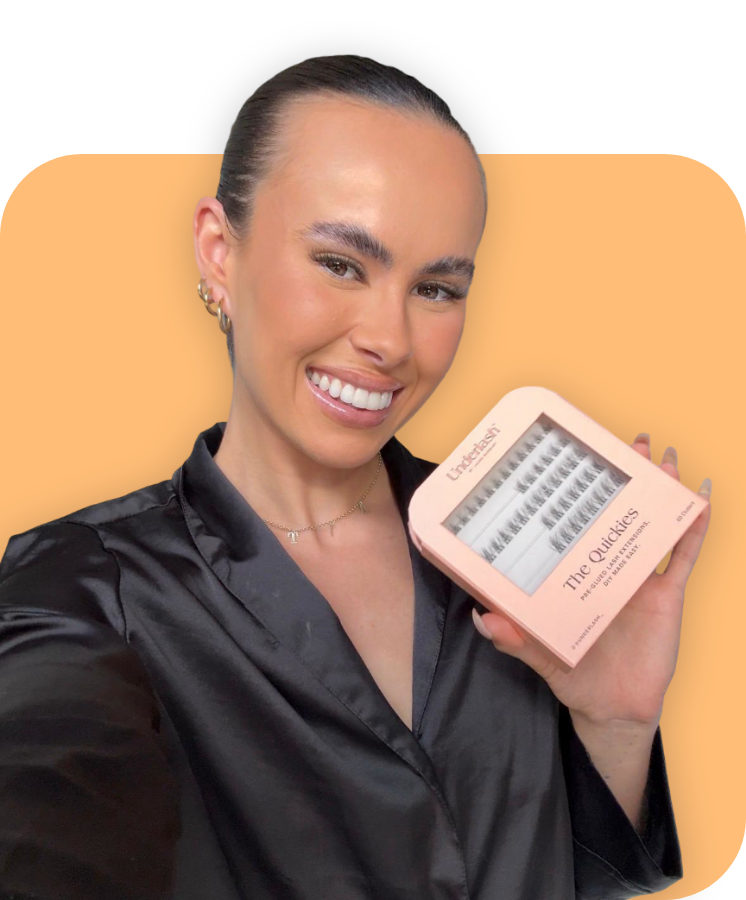
Pre-bonded clusters like The Quickies have the adhesive built into the cluster as a soft, clear strip - so when you apply them, there’s no separate bottle of glue to brush on, no fumes near your eye, and no excess adhesive sitting on your lash line.
The lash applies under your natural lash, the strip grips on contact, and you’re done in about five minutes. Wear time is up to 5 days. When it’s time to remove, they slide off without solvent.
Why it’s the sensitive-eye winner:
- No liquid glue means no fume exposure during application
- The pre-bonded strip uses a smaller quantity of adhesive than salon extensions
- No solvent removers required
- You can choose Flirty, Foxy or Flow in black or brown (gentler look)
- Many of our customers came to The Quickies because they reacted to salon extensions
Trade-off: 5-day wear instead of 10 like our DIY lashes with bond and seal. For sensitive-eye users this is often a feature, not a bug — shorter wear means less continuous contact with anything that might irritate.
Option 2: Gentle DIY bond systems (longer wear, still sensitive-eye friendly)
If you can tolerate a small amount of liquid bond and want longer wear time, a DIY system like The OG Underlash Bond & Seal uses a smaller volume of adhesive than salon extensions and applies under the lash for a far gentler placement. The bond is hypoallergenic and Latex free.
The application is fast (you do it yourself in 10 minutes with your eyes open) , the bond stays soft and tacky long enough to adjust placement, and you seal with The Seal on top. Wear is up to 10 days.
Why it works for many sensitive-eye users:
- Hypoallergenic formulation (no formaldehyde releasers)
- Application takes minutes with eyes open — minimal fume exposure
- Sits at the base of the natural lash, not glued directly onto the skin
- The Bond, Seal & Remover Bundle lasts 3–4 months
Important caveat: If you’ve had a confirmed cyanoacrylate allergy, even a gentler cyanoacrylate may trigger you. Stick to Option 1 (The Quickies) instead. However, if you’ve only had reactions to salon extensions or standard strip lash glue, you are likely fine to patch-test the OG Underlash bond first. We highly suggest trying the brown bond! Because it uses a lighter pigment, it is even gentler on sensitive eyes than the black formula.
Option 3: Magnetic lashes
Magnetic lashes use no glue. They clamp around your natural lash using a magnetic top and bottom band, or stick to a magnetic eyeliner. Sounds perfect for sensitive eyes — but there are real trade-offs.
- Pro: Zero adhesive contact with the lash line.
- Con: The magnets make the band thicker and heavier, which can drag on your natural lashes and cause tension headaches over a long day.
- Con: Magnetic eyeliners contain iron oxide, which some sensitive-eye users react to.
- Con: Single-day wear only. You take them off every night, which means doing your lashes daily.
Magnetic is a fine occasion option, but most people give up on them as a daily product because of the weight and the faff.
Option 4: Daily strip lashes with low-allergen glue
Cheap strip lashes are the original false-lash technology, and they’re still everywhere. The problem isn’t the lash — it’s usually the glue.
Most pharmacy strip lash glues contain formaldehyde, latex or fragrance. Any of those will set off sensitive eyes within minutes. If you’re committed to strip lashes, look for:
- Latex-free formulation
- No fragrance
- Made in Australia (TGA-aligned manufacturing)
- Hypoallergenic labelling backed by ingredient transparency, not just marketing
Even with the right glue, strip lashes are a single-day product — meaning daily application, daily removal, daily glue residue on your lash line. Over time this can dry out and damage your natural lashes, especially if you’re using oil-based removers.
The sensitive-eye lash compatibility cheat sheet
| Lash type | Glue involved? | Sensitive-eye rating | Wear time |
|---|---|---|---|
| Salon lash extensions | Strong cyanoacrylate | Not recommended | 6–8 weeks |
| The Quickies (pre-bonded DIY) | Pre-bonded strip — no liquid glue | Best | Up to 5 days |
| OG Underlash Bond & Seal | Hypoallergenic bond, small volume | Very good (patch test first) | Up to 10 days |
| Magnetic lashes | No glue — magnetic eyeliner instead | Good — but heavy and impractical daily | 1 day |
| Daily strip lashes | Strip lash glue (varies wildly) | OK only with low-allergen glue | 1 day |
What to look for on the label if you have sensitive eyes
Whether you go for The Quickies, OG Underlash, magnetic or strip lashes, these are the ingredient red flags to scan for:
Avoid
- Formaldehyde — or any “-formaldehyde” preservative (DMDM hydantoin, quaternium-15, imidazolidinyl urea)
- Latex — common in cheaper strip lash glues
- Fragrance / parfum — no reason for it to be in eye products
- Mink fur — cruelty issue aside, animal proteins can trigger eye irritation
- Prostaglandin analogues in any companion serum (bimatoprost, isopropyl cloprostenate)
Look for
- Hypoallergenic — backed by ingredient transparency, not just marketing
- Vegan and cruelty-free — rules out animal fur
- Synthetic silk or PBT fibre — lighter and less irritating than mink
- Dermatologically formulated for sensitive eyes
Every product across the Underlash range ticks every box in the “look for” list.
The sensitive-eye lash care routine
Even with the gentlest lashes, your daily routine makes a huge difference to how your eyes feel. Here’s what works.
Before applying your lashes
- Cleanse the lash line gently with Foaming Lash Cleanser using the included microfibre brush. It’s oil-free, paraben-free and made for sensitive lash lines.
- Pat dry — never rub.
- Skip mascara if you’re wearing extensions or Quickies (you don’t need it, and mascara residue is a major irritant trigger).
After 48 hours
- Cleanse again with Foaming Lash Cleanser.
- Keep face oils away from the eye area entirely.
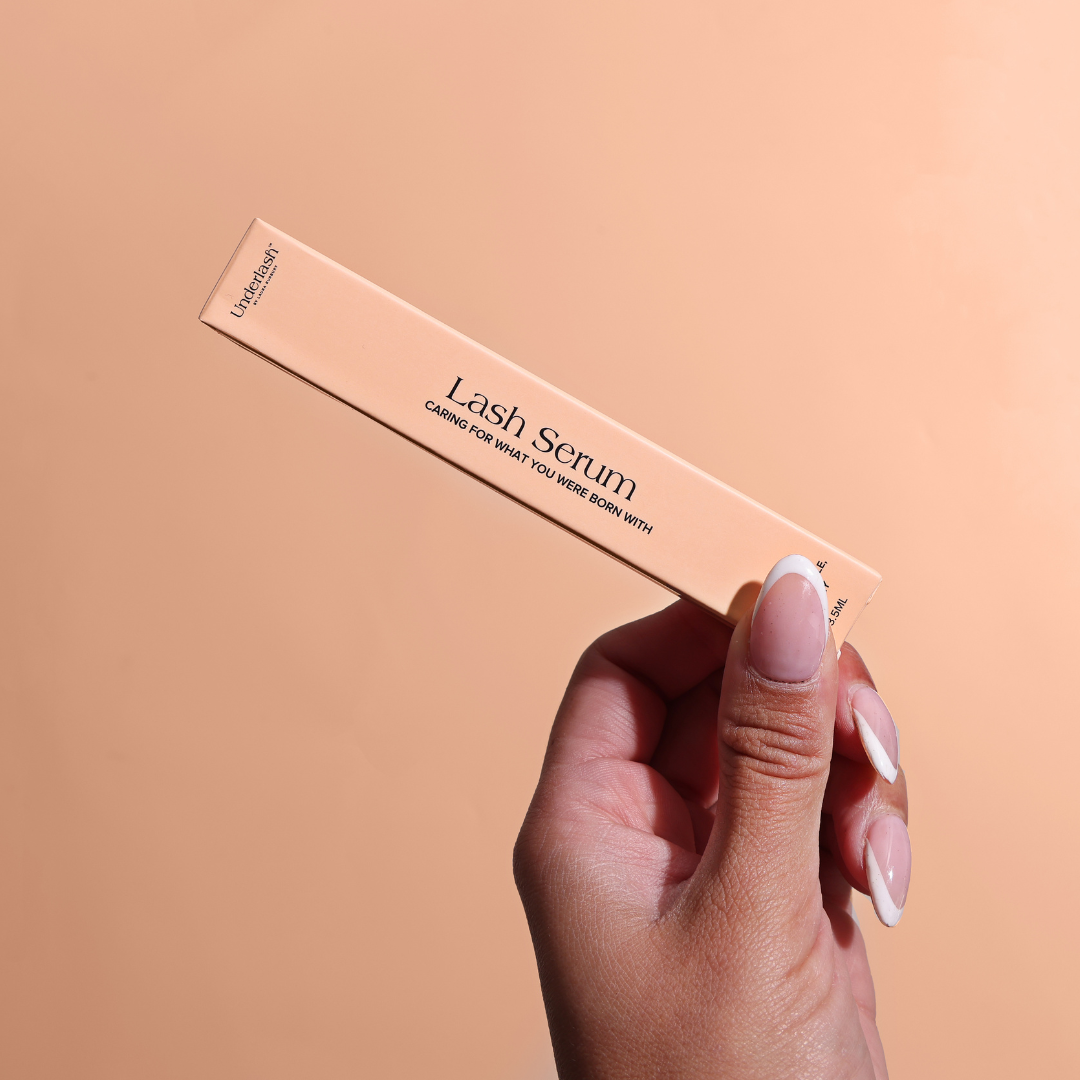
- Apply Underlash Lash Serum as a thin line along the upper lash line. It’s oil-free, prostaglandin-free, fragrance-free — formulated specifically for sensitive eyes.
Every 2–3 days (if wearing OG Underlash)
- Top up with The Seal to lock in wear time without re-bonding.
Removal
- The Quickies: You can purchase the remover separately or if you have worn a few days the lashes will come away easy — no solvent needed.
- OG Underlash: use The Remover (oil-free, sensitive-eye safe). Never use cooking oil, baby oil or eye-makeup remover on your DIY lashes.
FAQ
Can I wear false lashes if I have sensitive eyes?
Yes. The best option is pre-bonded DIY lash extensions like The Quickies, which use no liquid glue. Hypoallergenic DIY bond systems like OG Underlash are also generally well-tolerated if you patch-test first.
Are lash extensions safe for sensitive eyes?
Traditional salon lash extensions are not recommended for sensitive eyes because the high-strength cyanoacrylate adhesive and the 6–8 weeks of continuous contact often trigger reactions. DIY pre-bonded alternatives like The Quickies are far gentler.
What false lashes are best for people who react to lash glue?
If you’ve had a confirmed lash glue allergy, choose pre-bonded clusters like The Quickies — no separate liquid glue is required. Magnetic lashes are another glue-free option, but they’re heavier and only last one day.
What ingredients in lash products irritate sensitive eyes?
The most common triggers are formaldehyde and formaldehyde-releasing preservatives (DMDM hydantoin, quaternium-15), latex, fragrance, prostaglandin analogues (in lash serums), and animal proteins like mink.
Why do my eyes water when I wear false lashes?
Usually it’s a reaction to the glue, the fumes during application, or a preservative in the strip itself. Switching to a pre-bonded DIY option that doesn’t require liquid glue eliminates the most common cause.
Can I wear false lashes if I have a salon glue allergy?
Yes. A salon glue allergy doesn’t mean you have to give up on lashes. The Quickies have the adhesive built into the cluster strip itself, so there’s no separate glue to react to. Many of our customers came to Underlash specifically after a salon reaction.
Is the Underlash Lash Serum safe for sensitive eyes?
Underlash Lash Serum is oil-free, prostaglandin-free, fragrance-free, vegan and made in Australia — formulated specifically for sensitive eyes and DIY lash extension wearers. Patch-test before first use.
How long do glue-free lash extensions last on sensitive eyes?
Pre-bonded DIY lashes like The Quickies last up to 5 days. Hypoallergenic DIY bond systems like OG Underlash last up to 10 days. Both are far gentler than salon extensions.
Ready to find your sensitive-eye lash match?
- Reacted to salon glue? Start glue-free with The Quickies — pre-bonded, 5-day wear, applies in 5 minutes.
- Want longer wear with a gentle bond? Try The Starter Kit with OG Underlash — hypoallergenic, Australian-made, lasts up to 10 days.
- Building a sensitive-eye lash routine? Pair Foaming Lash Cleanser with Underlash Lash Serum — both oil-free, fragrance-free, sensitive-eye safe.
- Not sure which style suits you? Take the lash style quiz on our homepage to find your perfect set.
Browse the full Underlash range — every product is hypoallergenic, vegan, Australian-owned, and built for real eyes, including the sensitive ones.
Disclaimer: The information provided in this guide is for educational purposes and does not constitute medical advice. If you are experiencing severe allergic reactions or eye infections, please consult a healthcare professional or optometrist.